
Every food culture has its bread. Norway has two flatbreads that look almost identical, behave almost identically, and cause endless good-natured confusion among visitors: lefse and lompe.
They both come from potatoes. They both show up in the same shops, folded into the same packets. And they both carry the same legendary filling. But they are not the same thing, and knowing the difference is a small, satisfying key to Norwegian everyday food.
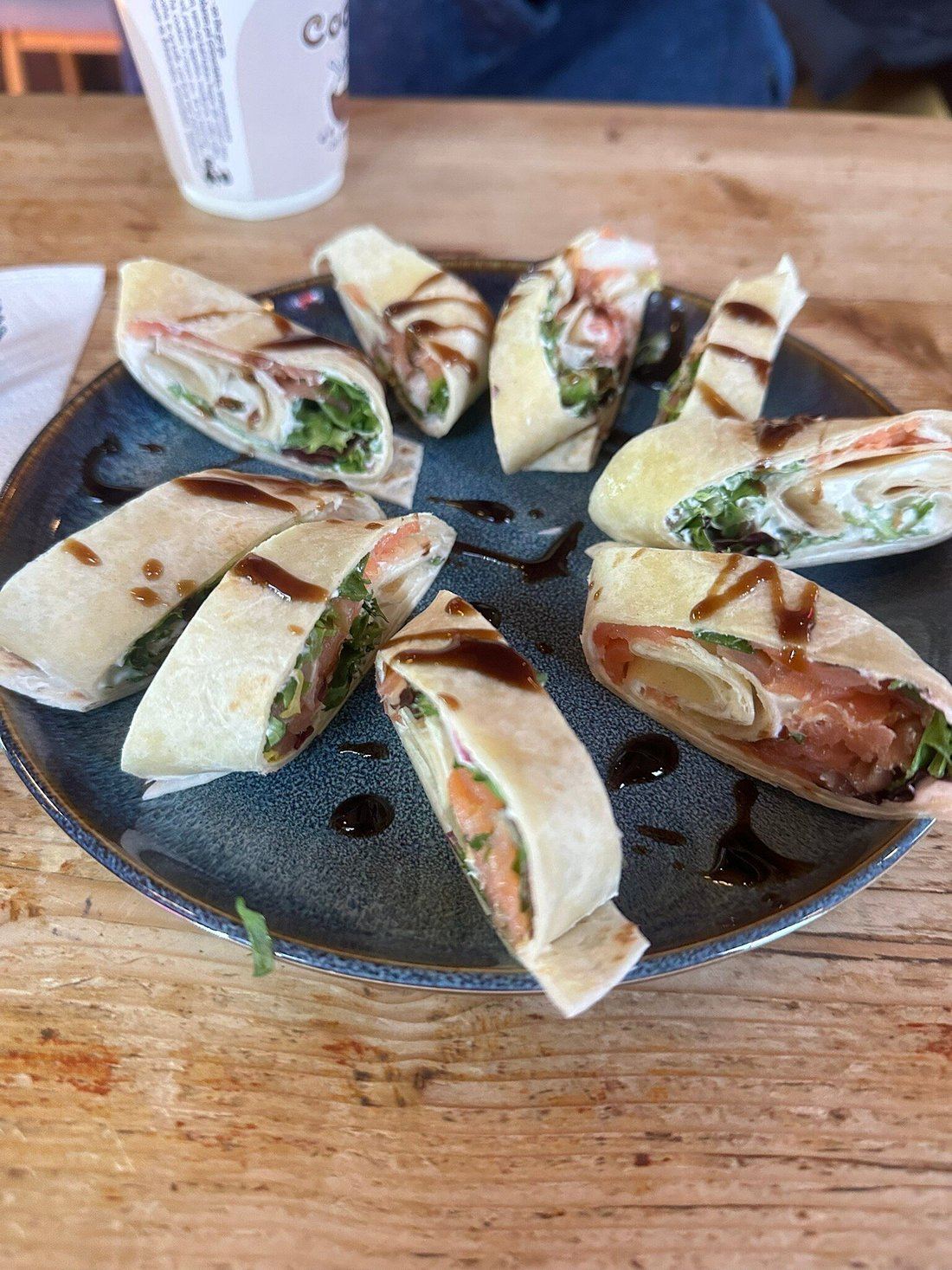
Lefse: the festive one
Lefse is the older and softer of the two: a thick, tender flatbread made largely from boiled potatoes, flour and butter, rolled thin and cooked on a dry griddle until pale golden with gentle brown spots.
Historically, lefse was preservation food. Potatoes were abundant, bread-worthy grain was not, and a flatbread that could be dried, stored and softened again fed families through long winters. In Vestlandet, western Norway, a paper-thin variant called lefse-kling or simply kling is still served in layers with butter, sugar and cinnamon, cut like a cake.
Today lefse leans festive and sweet: filled with butter and sugar at Christmas, wrapped around brunost and jam for a hike, or served plain alongside dinner in parts of the country where it remains a point of family pride.
Norwegian emigrants carried lefse across the Atlantic, and it is still a proud tradition in the American Upper Midwest. Every autumn, church basements in Minnesota and North Dakota fill with grandparents making lefse by the hundreds, on dedicated griddles, with dedicated rolling pins.
Lompe: the everyday one
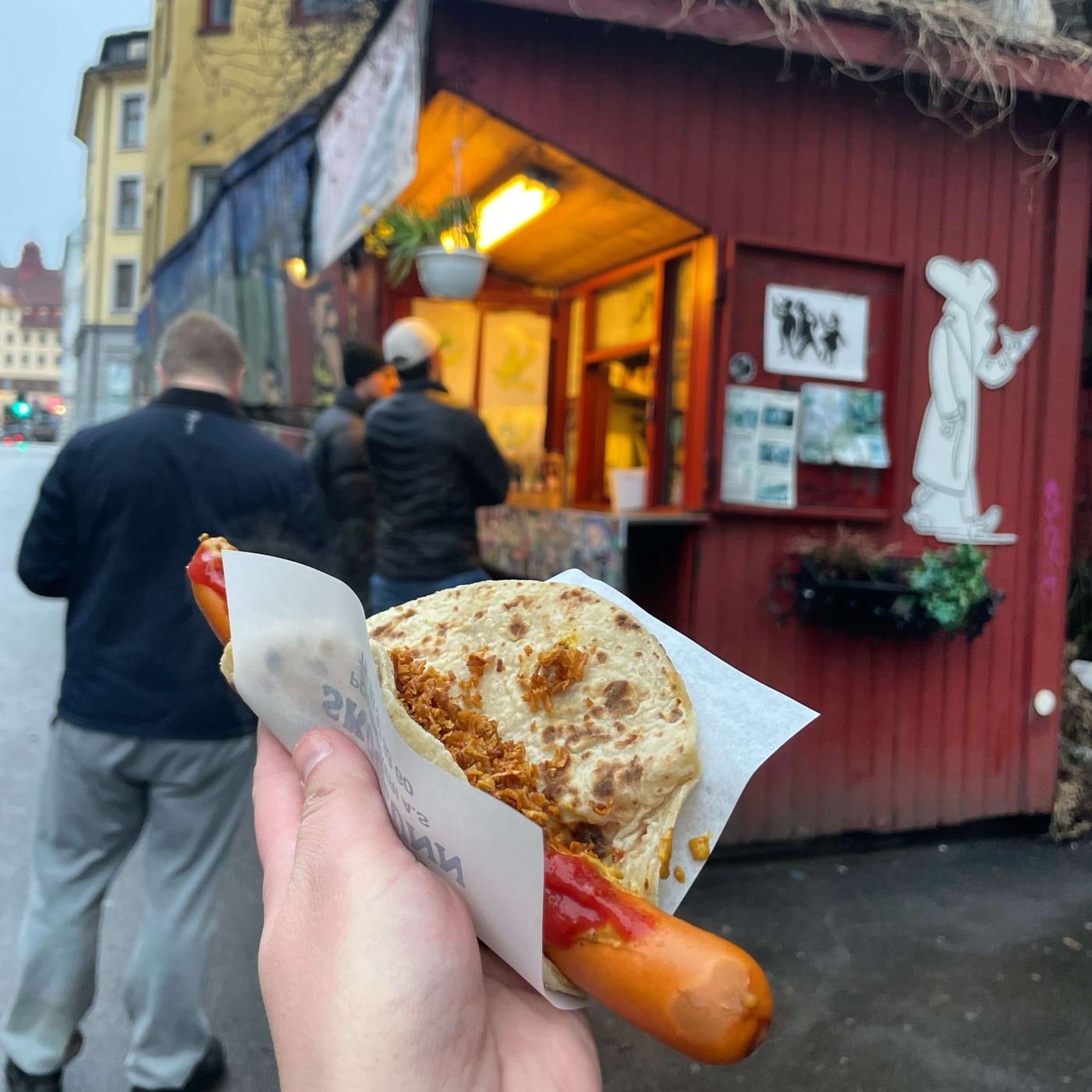
Lompe (also called potetkake, the potato cake) is thinner, smaller and more humble. It is essentially a soft flour-and-potato tortilla of Norway, cooked quickly on a griddle or, in modern life, bought in stacks at the supermarket.
Where lefse gets the holidays, lompe gets Tuesday. Its defining role is the national hot dog: pølse i lompe. A grilled wiener, ketchup, mustard, crispy onions, wrapped in a thin flatbread instead of a bun. More than half of all hot dogs in Norway are eaten this way, and it is a genuinely better engineering solution than bread: the lompe holds, it does not crumble, and it tastes like nothing but encouragement.
The difference in one sentence
Lefse is thicker, softer and sweeter-adjacent; lompe is thinner, drier and built for wrapping. Lefse is a treat, lompe is a tool. If a Norwegian hands you one with a hot dog inside, it is a lompe. If it arrives with butter, sugar or cinnamon, lefse. If you are still unsure: look at the edge. Lefse is plump and pillowy; lompe is neat and flat, like it has somewhere to be.
And brunost? The filling that rules them all
Here is the part visitors remember. Both breads exist, in large part, as delivery vehicles for brunost: the caramel-brown whey cheese that tastes of caramel, salt and childhood.
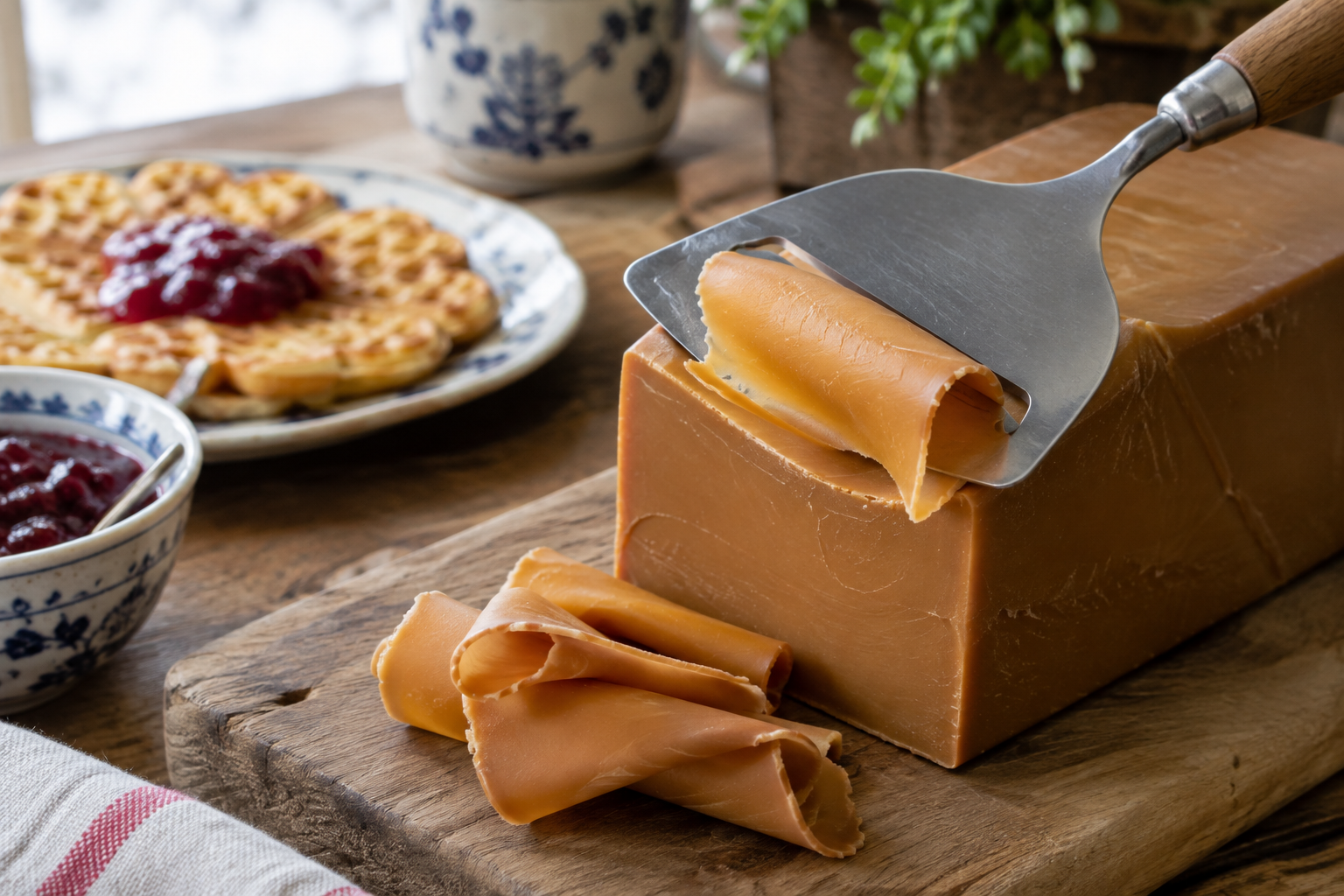
Brunost is not a cheese in the French sense. It is made by boiling whey until the milk sugars caramelise, then pressed into familiar brick-shaped blocks and shaved with a cheese slicer into paper-thin curls. Slice it thick, lay it on a fresh lompe or lefse, add strawberry jam, fold, and you have brunost og syltetøy i lefse: arguably the most Norwegian thing a person can eat standing up.
The classic trio, therefore, is not really a competition. Lefse or lompe is the bread, brunost is the heart, and jam is the argument settled in favour of sweetness. Norwegians have eaten this combination for generations, on mountain hikes, in school lunchboxes and at kitchen tables, and nobody has ever once improved on it.
Try it for yourself
Reading about flatbread only gets you so far. On our Grünerløkka Food Tour, you will taste Norwegian staples the way locals actually eat them, including brown cheese done properly, and learn the stories behind every stop along the Akerselva.
And if you would rather start with the sweet side of Norwegian baking, our waffle guide covers the heart-shaped third sibling of this family in full detail.
See you in Oslo.