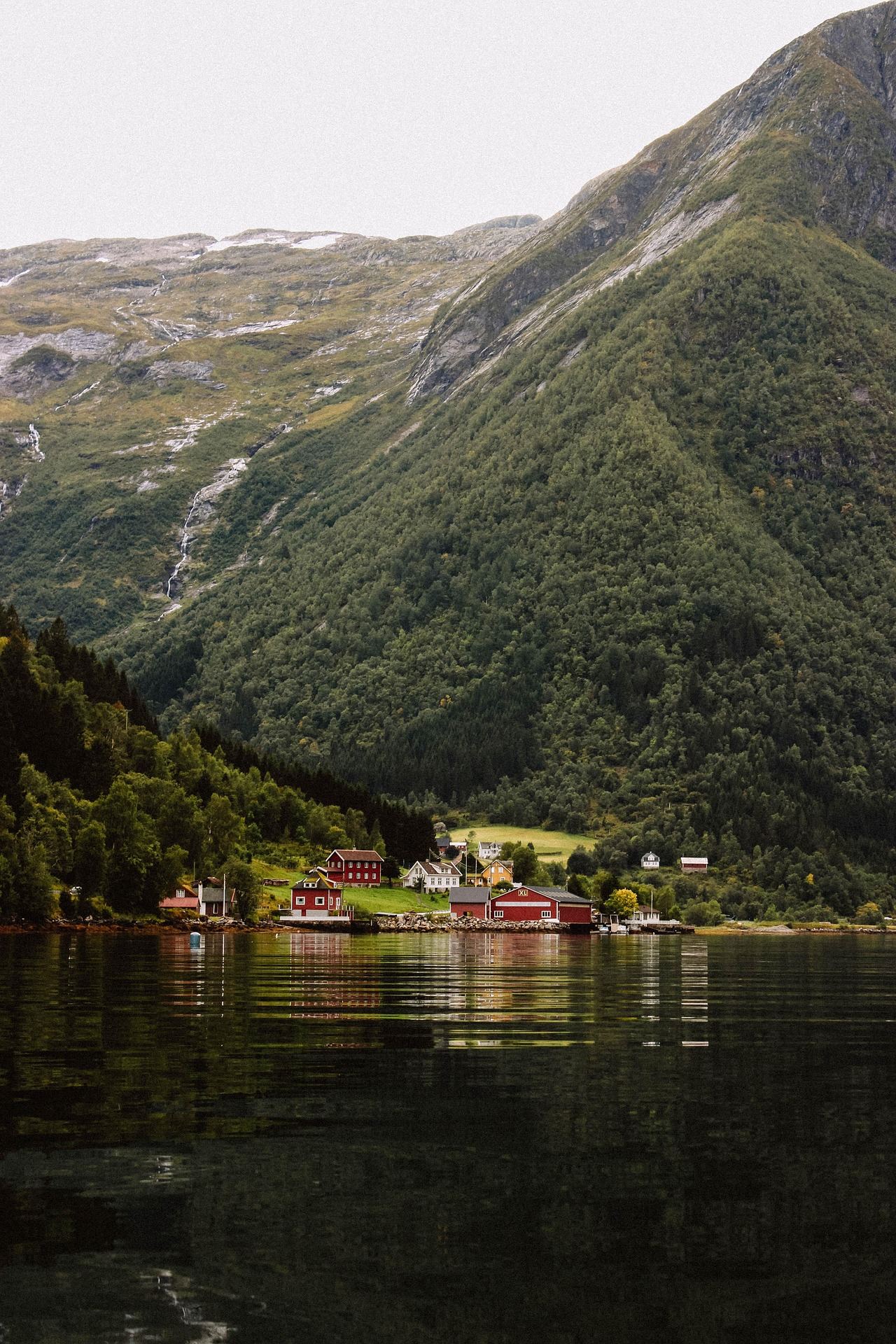
One of the questions we hear most on our tours is some version of "why do Norwegians eat the things they eat?" Brown cheese, dried fish, berries with cream. The honest answer is: look out the window. Norway's landscape isn't just scenery here, it's the reason the food looks the way it does.
Imagine life here before supermarkets, imported vegetables and refrigeration. Norway was never an easy place to farm. The soil is thin, the mountains are steep, and even today only around three percent of the land is cultivated. Along the coast, that meant fish. In the mountains, sheep and goats grazed land nothing else could use. Forests gave berries, mushrooms and game, while small farms grew whatever hardy crops survived the northern climate.
Those practical solutions became traditions. And many are still on the table today.
The Sea Has Always Been Norway's Pantry
With a coastline this long, seafood was never optional, it was life. Fish fed families, and long before oil made Norway wealthy, it was one of the country's most valuable exports.
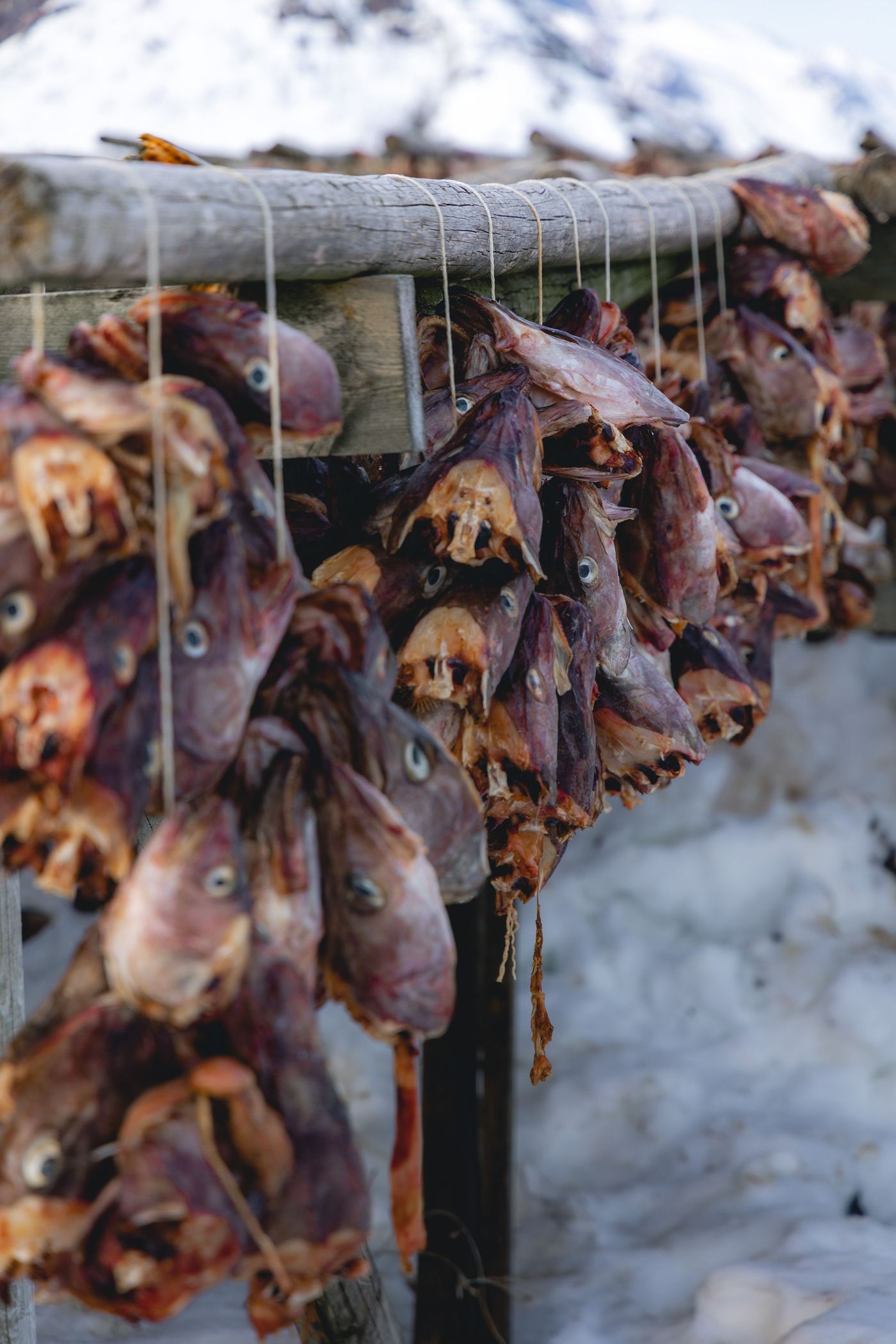
Our favourite example is tørrfisk, stockfish. Every winter, cod migrate to the waters around Lofoten in northern Norway, and for centuries fishermen have hung them on huge wooden racks to dry in the open air. No salt, no smoke. Just fish and Arctic air. Once dried, the fish kept for months, which made it gold in a world without refrigeration. Norwegian stockfish was traded across Europe, especially to Italy, where it still lands in traditional kitchens today.
We love that a preservation trick from a remote fishing village built trade routes that have lasted centuries. Salted cod, pickled herring, smoked salmon, all tell the same story. Today we eat them because we love the flavours. Originally, they were survival. (If the sea side of this fascinates you, we've collected eleven fun facts about Norwegian seafood.)
Life in the Mountains
Away from the coast, the land offered a different deal: poor for crops, perfect for grazing. In summer, farmers traditionally moved their animals up to mountain pastures, a practice called seterdrift, and turned the milk into butter and cheese right there on the mountain.
Which brings us to brunost, the famous brown cheese. If you've never tried it, prepare to be surprised: it isn't really a cheese at all. It's whey, the leftover liquid from cheesemaking, slowly simmered until the milk sugars caramelise. The result is somewhere between cheese and caramel, eaten in paper-thin slices on bread, crispbread or waffles.
This is Norwegian food logic at its best: nothing goes to waste, and what's left over becomes the country's most iconic food. Most Norwegians probably don't think about any of this at breakfast, but brunost's story is one of a time when every ingredient mattered.
Making Food Last Through Winter
If geography shaped Norwegian food, winter finished the job. Imagine a small farm two hundred years ago: a short summer, a very long winter, and whatever you managed to store is all you get.
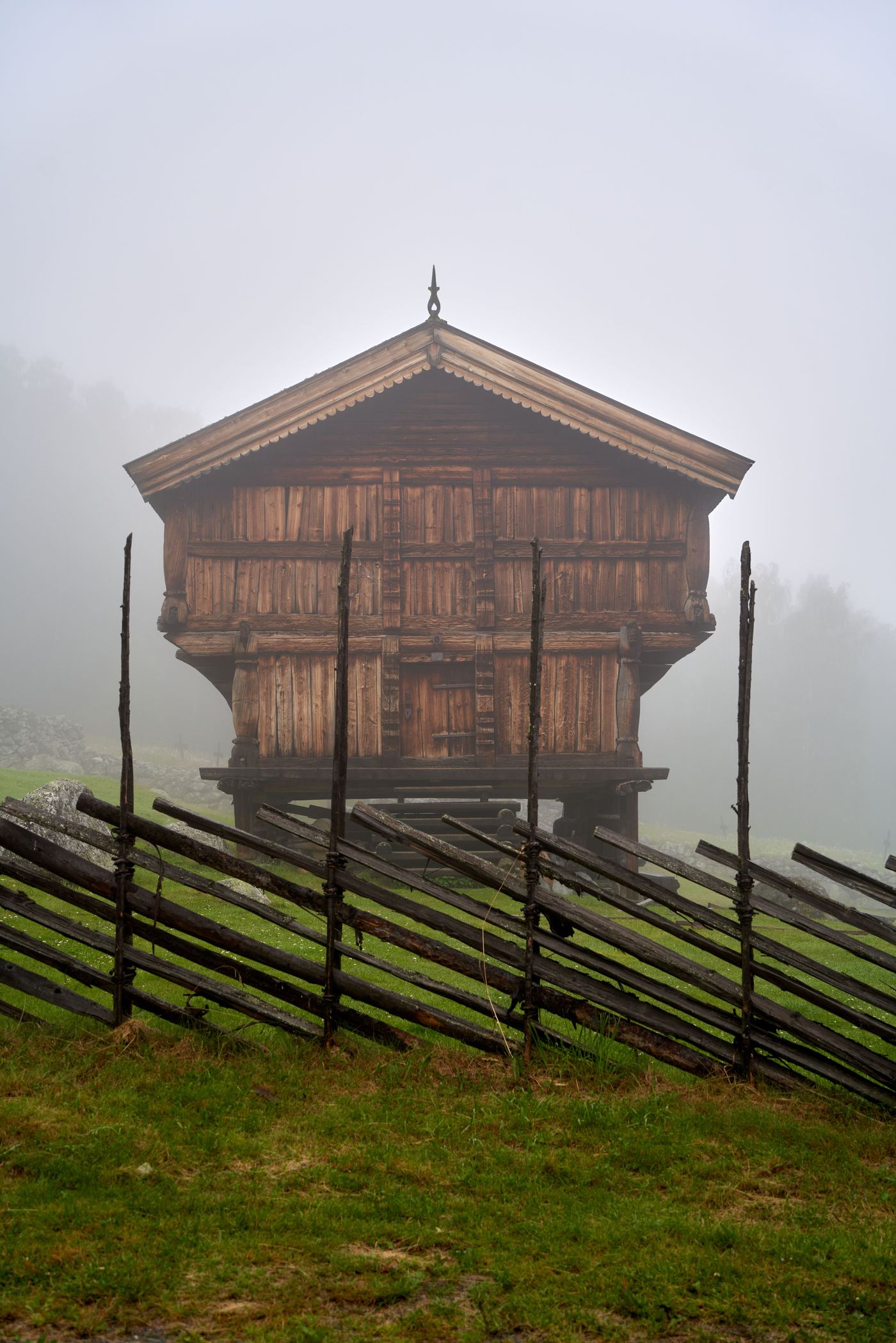
So food needed a safe home. Many Norwegian farms still have a stabbur standing in the yard: a traditional storehouse raised on stilted wooden legs, built to keep grain, flour, Flatbrød and preserved food dry and cool, out of reach of mice and moisture. Some of these little log buildings are beautifully carved and centuries old, and they quietly sum up the whole mindset: food was survival, and survival deserved good architecture.
Inside the farmhouse, the work continued: fish was dried, salted or fermented. Meat was cured and smoked. Berries were preserved, root vegetables tucked away. Some of Norway's most beloved dishes grew straight out of this. Pinnekjøtt, the Christmas classic of salted lamb ribs steamed over birch sticks, started as pure preservation. And then there's rakfisk, fermented trout with a smell that splits every dinner table in half. Not everyone's first love, but it's fascinating how survival food became celebration food.
Curious what all of that looks like on a modern Christmas table? Our guide to Norwegian Christmas food covers ribbe, pinnekjøtt, lutefisk and the rest of the December lineup.
The Magic of a Short Norwegian Summer
Norwegian nature isn't only cold and dark. Summer flips a switch. The days stretch long, in the north the sun doesn't set at all, and the season, though brief, produces things people genuinely get emotional about.
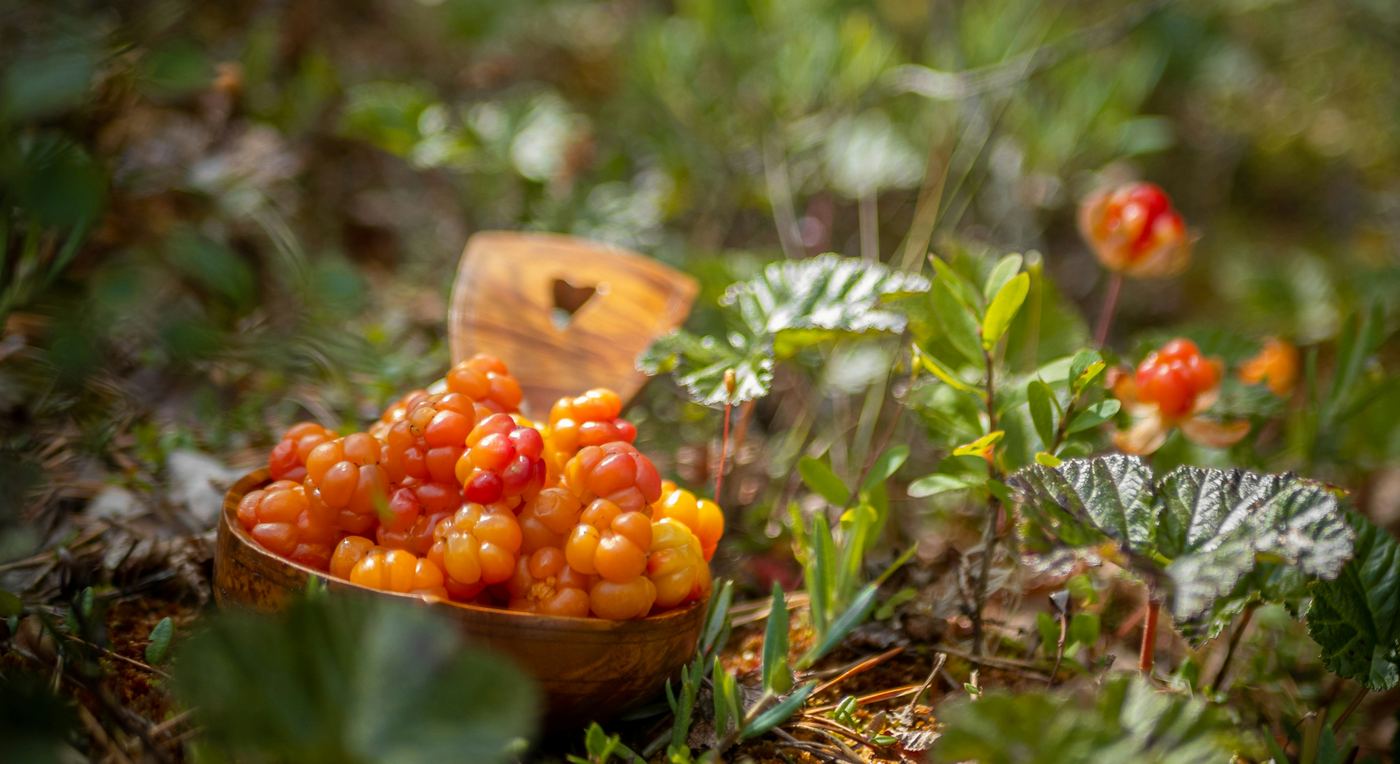
Norwegian strawberries, for one. Locals count down to them every year, and the slow, cool ripening makes them remarkably sweet. Then come the wild berries: blueberries, lingonberries, raspberries and the golden treasure of them all, cloudberries. Picking them is still a beloved summer ritual, and often more about being outside than the harvest itself.
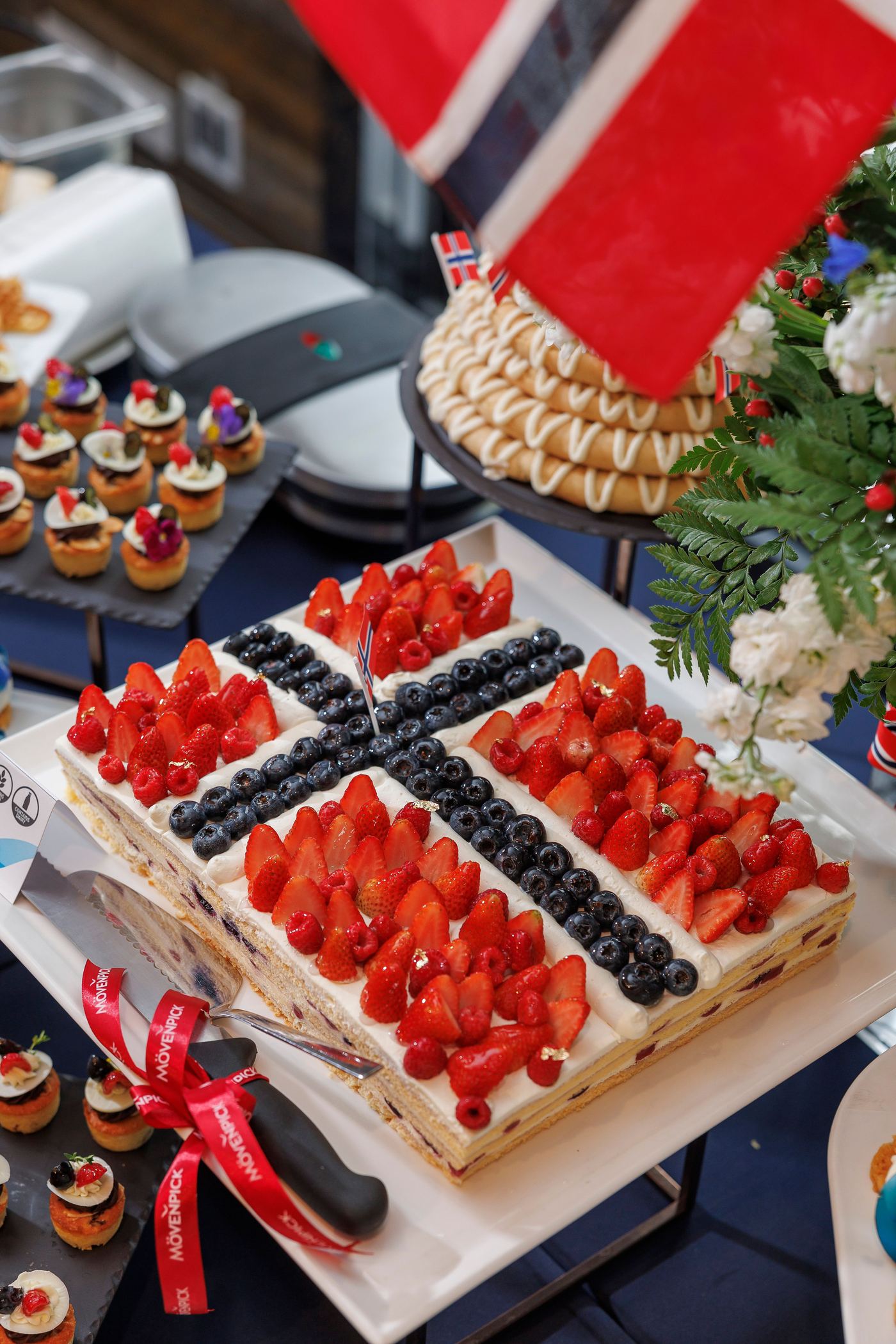
There's something very Norwegian about walking through bogs for hours, finding a few handfuls of multer, and then saving them for multekrem, a whipped-cream dessert served at Christmas, months later. Patience, nature and celebration all on one spoon.
From Tradition to Modern Norwegian Cuisine
Norwegian cooking was long seen as simple. But simple never meant boring. In recent decades, chefs have gone back to their grandparents' pantry for inspiration: wild herbs, seaweed, cured fish, game, seasonal berries. The New Nordic movement made these ingredients fashionable, but the philosophy behind it, local, seasonal, zero waste, was never new. Norwegians simply did it out of necessity first, and now out of pride.
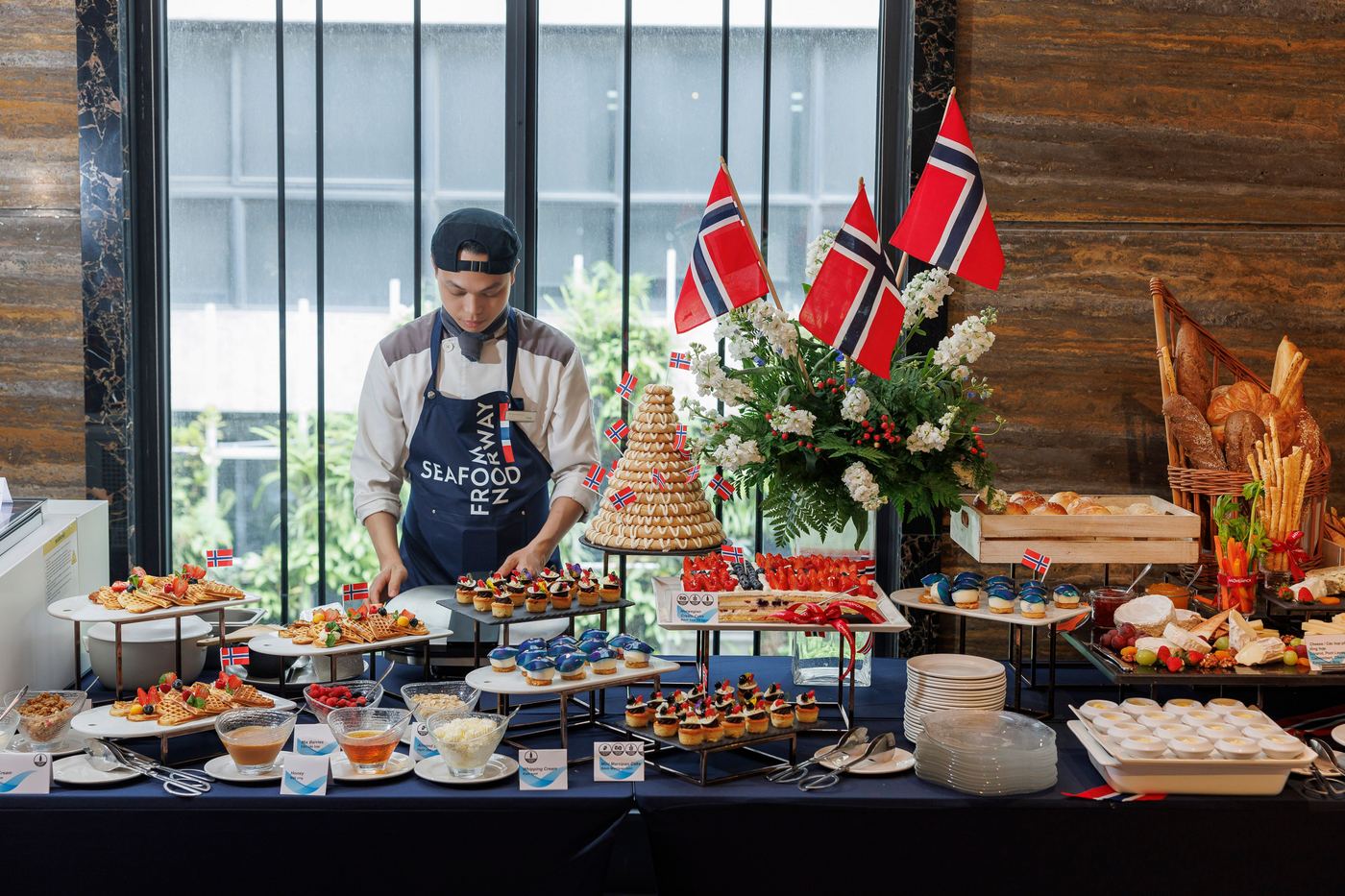
Oslo is the best place to watch this happen. The city's food scene has transformed in twenty years: traditional kitchens alongside restaurants rethinking Nordic ingredients, small producers reviving old techniques, and a wonderfully diverse food culture shaped by people from all over the world. You can eat a waffle with brown cheese in the afternoon and a completely new take on Norwegian ingredients at dinner. Both will tell you something about this country.
A Little Taste of Norway
This is why we love Norwegian food: it's never just food. The stockfish racks in Lofoten, the sheep on mountain pastures, the cloudberries hidden in northern bogs, the cheese born from leftovers, each one is a small piece of Norway's story.
So next time you taste brown cheese or a piece of cured fish, know there's a bigger story behind it. And if you'd like to hear those stories while wandering Oslo with us, that's exactly what our Grünerløkka Food & Culture Walk is for. Because food always tastes better when you know the story behind it. And even better when you have someone to share it with.
See you in Oslo.