
Ask anyone who has visited Norway what surprised them most about the food, and you will hear the usual suspects: brown cheese, reindeer, that cinnamon thing they ate three of.
But the answer that makes people go quiet for a second, the one they say with real feeling, is usually: the waffles.
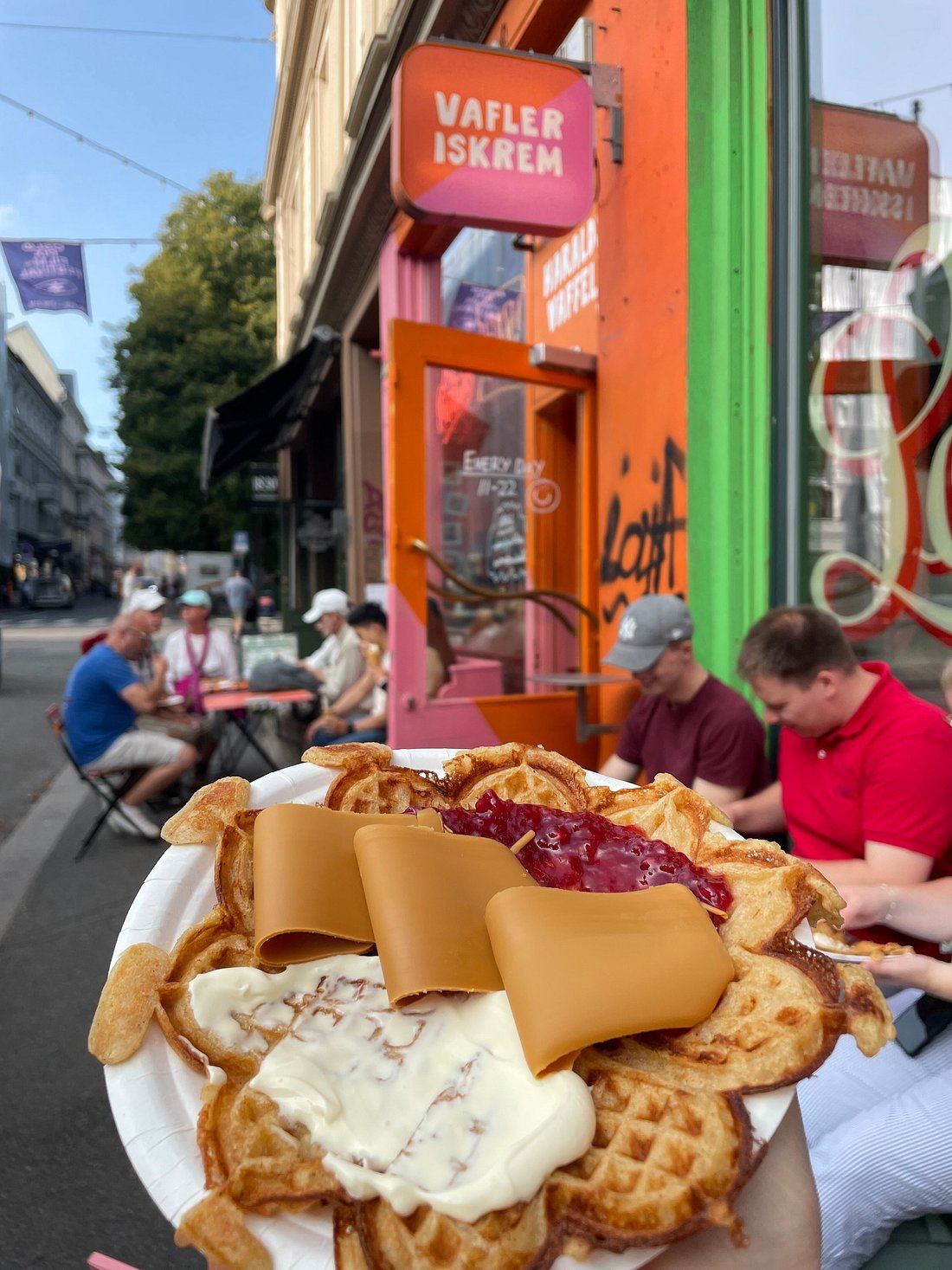
Heart-shaped, golden, slightly crisp at the edges and soft in the middle, served not as dessert but as an ordinary Tuesday. With jam. With sour cream. With brown cheese, if you trust us.
Everybody loves them. They come in different sizes and shapes, but regardless of the look, they are liked all over the world. The most famous reside in Belgium, and the sweetest are probably from the Netherlands.
But the waffles Norwegians are most devoted to? Those are ours. And they have a surprisingly long story.
From ancient Greece, with love
The first waffles, in the form of a flat cake baked between two hot metal plates, were mentioned in ancient Greece. Back then they were simple: grain flour and water, pressed between hot irons, usually round.
As the idea spread through medieval Europe, the tasty dish became known as a wafer.
At first the ingredients were very basic. But new culinary ingredients arriving in Western Europe meant a richer base for waffle making, and the little cake started its long climb towards greatness.
The word "waffle" only appeared in English around the 17th century, and it comes from the same root as "wafer". Before that, English speakers were apparently too busy eating them to worry about naming them.
Eggs, flour and wine
According to the first written waffle recipes, from 14th-century France, eggs, flour and wine were the base. Yes, wine. Medieval bakers did not come to play.
The milk of the time was mostly used for making cheese, which could be grated between two halves of a dough. That must have been tasty.
By the 15th century, waffle irons started to develop their own personality, taking on a rectangular shape to be distinct from the original round ones, which were still used mostly for communion wafers.
And by the 16th century, paintings by Belgian artists clearly show the modern waffle grid form that most of us are used to today. Art historians call it genre painting. We call it proof that people have always been proud of their waffles.

Then Norway enters the story
Centuries of waffle production made them richer, tastier and sweeter. Today you can find them everywhere: frozen, freshly made at home, in a coffee shop, or on the dessert menu of a Michelin-starred restaurant.
The first recognized Norwegian waffle batter recipes appeared in the early 18th century, in Stavanger, in the library of the Kielland family. The batter was made of wheat flour, sugar, butter and eggs, spiced with ground cardamom, mace, cloves, anise seeds and ginger.
Cardamom, that most Norwegian of spices, has to be imported from as far away as India and Guatemala. Norwegians use more of it per person than almost anyone else on Earth, and our waffles are one of the main reasons.
What is quietly remarkable is how many of those ingredients are still found in a Norwegian waffle recipe today. Three hundred years later, we are essentially eating the same recipe. When something is that good, you do not change it. You just make more of it.
The shape of hygge
Today, waffles make up a great deal of daily Norwegian food culture. They are eaten often, and they are firmly associated with hygge: cosy time, family time, that particular Norwegian art of making an ordinary afternoon feel like a small holiday.
There is a reason they are heart-shaped here. Nobody needed waffles to be heart-shaped. We chose it, a long time ago, and it stuck. A Norwegian waffle is not really a food. It is a welcome.
Walk into a Norwegian home around five in the afternoon, or a mountain cabin, or a school fundraising day, or literally any self-respecting café, and the smell of fresh waffles tells you everything you need to know: you can relax here now.
The part that surprises everyone: brunost
Here is where visitors divide into two groups.
A typical Norwegian waffle serving includes berry jams, sour cream, and brown cheese, brunost. Made from boiled whey, milk and cream, brunost has a slightly creamy, caramel-like texture and a sweet, tangy taste that makes it a perfect waffle partner.
The cheese goes on the waffle while it is still warm, so it softens ever so slightly. Jam on top if you like. Sour cream if you are doing it properly.
Many consider this combination an unusual one. We assure you: it is very delicious. The sweetness of the cheese, the warmth of the waffle, the tartness of the jam. It works, and Norwegians have known it for generations.
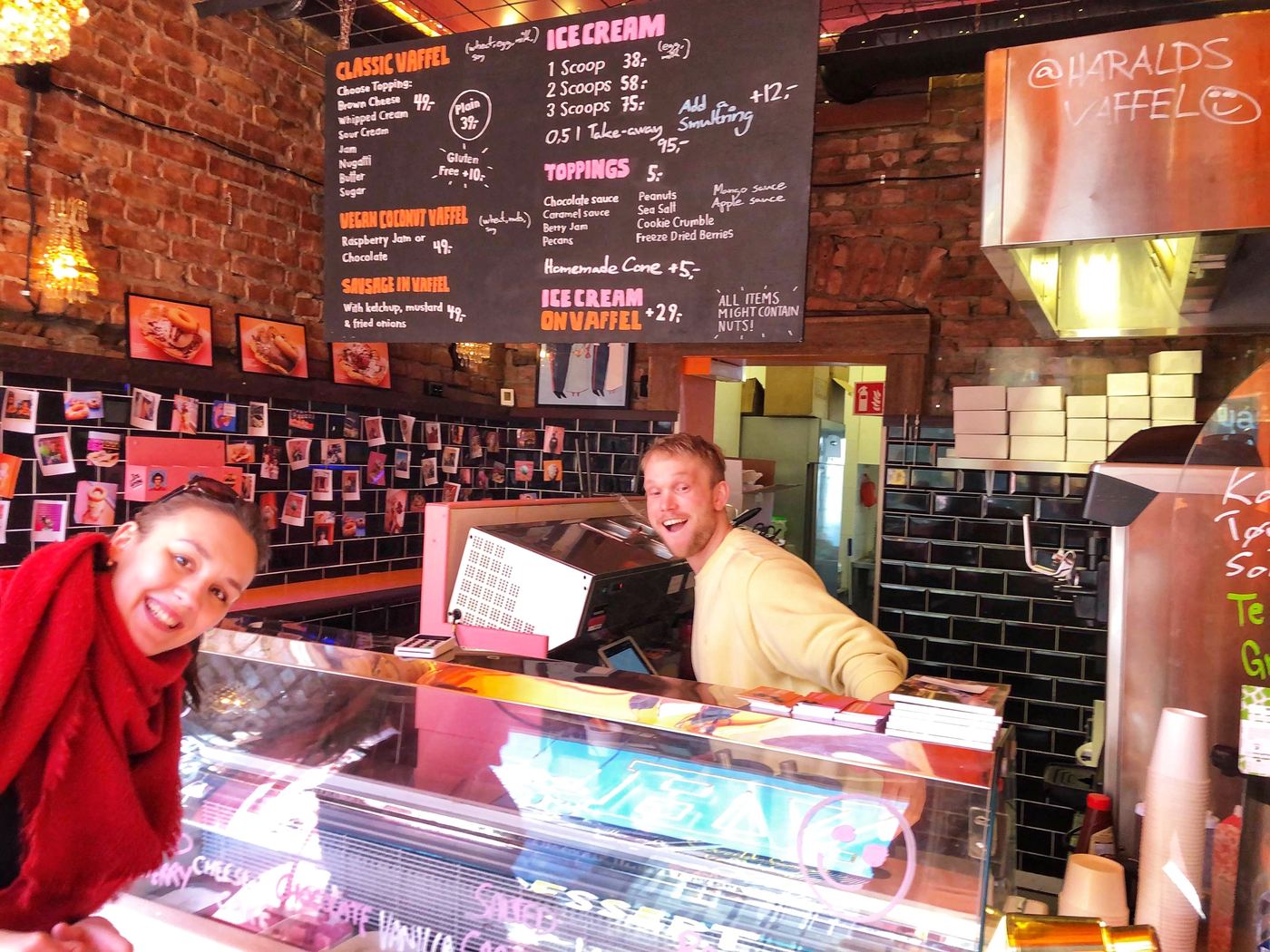
Do not just take our word for it. On our tours we regularly stop at Haralds Vaffel, a tiny waffle bar where the menu offers everything from classic brown cheese to waffles wrapped around hot dogs. Our founder is in the picture below, and yes, the waffle was excellent.
And then there is the moss waffle
Just when you thought Norwegian waffles could not get any more inventive, along came the moss waffle (mossvaffel): a hot dog wrapped in a fresh heart-shaped waffle, topped with ketchup, mustard and crispy fried onions.
Sweet dough, savoury sausage, crunchy onions. It sounds like a dare, and honestly, it is a little bit of a dare. It is also exactly the kind of playful street food Oslo does well: found at waffle bars, festivals and night markets, eaten standing up, usually with a bit of ketchup on your chin.
Not everyone is convinced at first. Almost everyone is converted after the first bite.

Try it for yourself
If you still do not believe us, do not take our word for it. Come and try it.
On our Grünerløkka Food Tour, waffles make an appearance the way they do in real Norwegian life: warmly, generously, and usually right when you need them. You will taste them the local way, with the toppings done properly, and you will finally understand what all the fuss is about.
And if you are an early riser, our Breakfast Tour (coming soon) will be built around exactly this kind of morning ritual: fresh waffles, good coffee, and the cosy Oslo morning that locals never want to end.
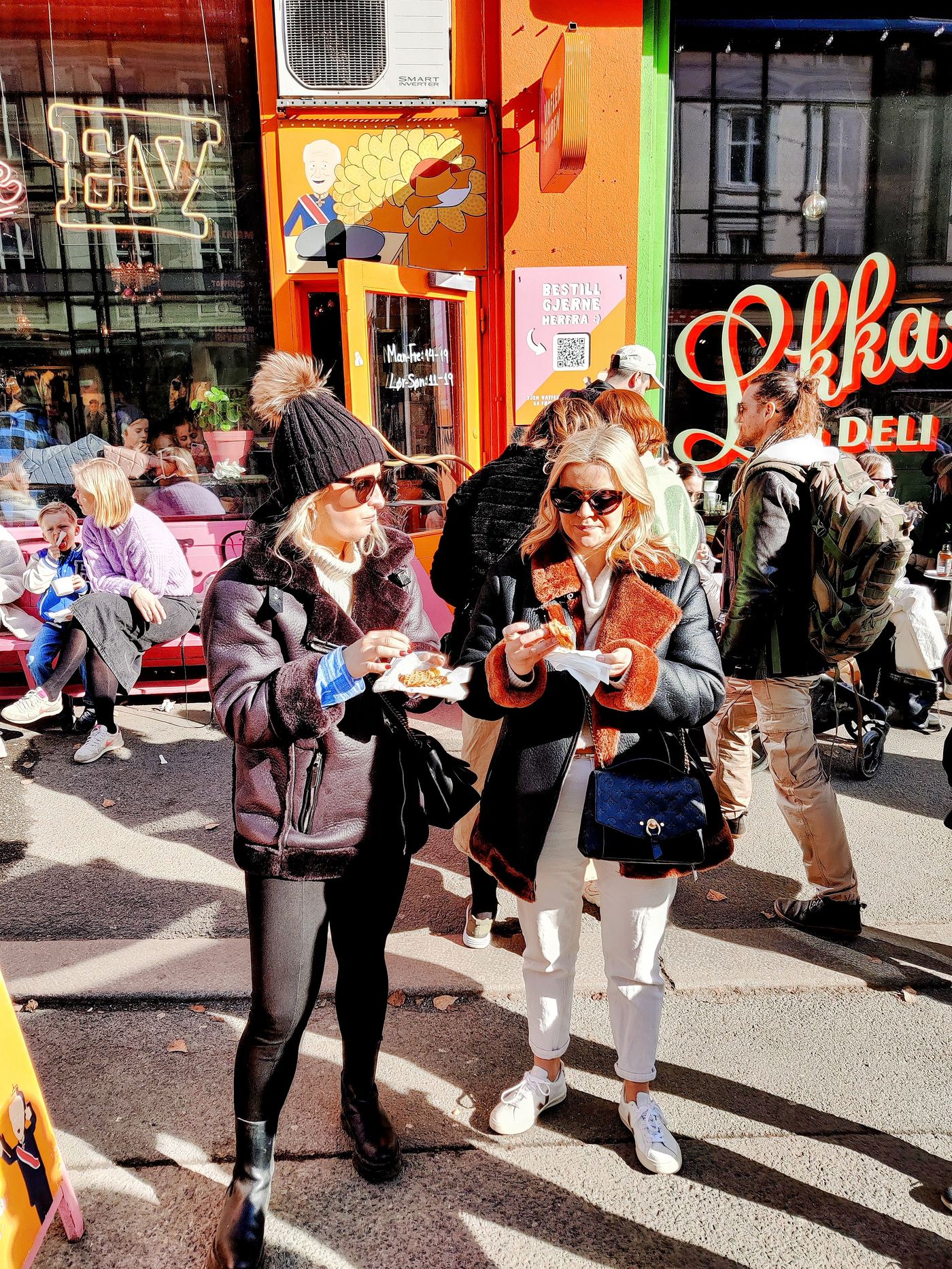
You will not like our waffles. You will LOVE them. We see it happen every single week.
See you in Oslo. 🧇