
Spend a few days in Oslo and you will notice one thing fairly quickly: we drink a lot of coffee.
At home. At work. After a walk. Before a walk. Outside on the first sunny day in March, when it is still objectively far too cold to be sitting outside.
Coffee is simply part of the day here.
For years that meant a pot of black filter coffee, and in plenty of Norwegian homes and workplaces it still does. You arrive somewhere, someone says "Kaffe?", and unless you have an excellent reason, you say yes.
But somewhere along the way, Oslo became surprisingly serious about what was going into those cups.
Now we have tiny neighbourhood coffee bars, roasters with international reputations and baristas who have won world championships. People fly here for coffee.
And, in very Oslo fashion, almost none of the places responsible make any fuss about it.

So how did Oslo become a coffee city?
Norway's relationship with coffee is a good deal older than the flat white.
We are among the world's biggest coffee drinkers, and coffee has always been tied to being sociable. Visit someone's home and a pot tends to appear. Go to a cabin and making coffee is practically part of unpacking.
Then, through the 1990s and early 2000s, things shifted.
A small group of baristas started treating coffee differently, paying attention to where the beans came from, how they were roasted and how they were brewed.
They became very good at it.
Robert Thoresen, who opened Java Espressobar at St. Hanshaugen in 1997, became the first ever World Barista Champion in 2000. A few years later another Norwegian barista, Tim Wendelboe, won the same title.
Which is where the story moves rather close to home for us.
Tim Wendelboe, and Grünerløkka
In 2007, Tim Wendelboe opened his own coffee bar and roastery in Grünerløkka.
Walk past it knowing nothing, and you would underestimate it completely. It is small. It sits on a fairly ordinary Grünerløkka street. There is no enormous sign announcing that you have arrived at one of the most famous coffee bars in Scandinavia.
That is part of why we like it.
People who care deeply about coffee travel across the world to stand in it. Locals walk past with dogs, bicycles and shopping bags.
Very Grünerløkka.
Inside, the coffee is taken extremely seriously. The beans are roasted much lighter than most visitors expect, so a filter coffee can taste of berries, flowers or citrus rather than the dark, bitter thing you had braced yourself for.
If you have only ever thought of coffee as strong or weak, it is a bit of a revelation.
Oslo coffee is not really about fancy coffee
This is the part that gets misunderstood.
Oslo's coffee culture is not flashy. If anything, it is the opposite.
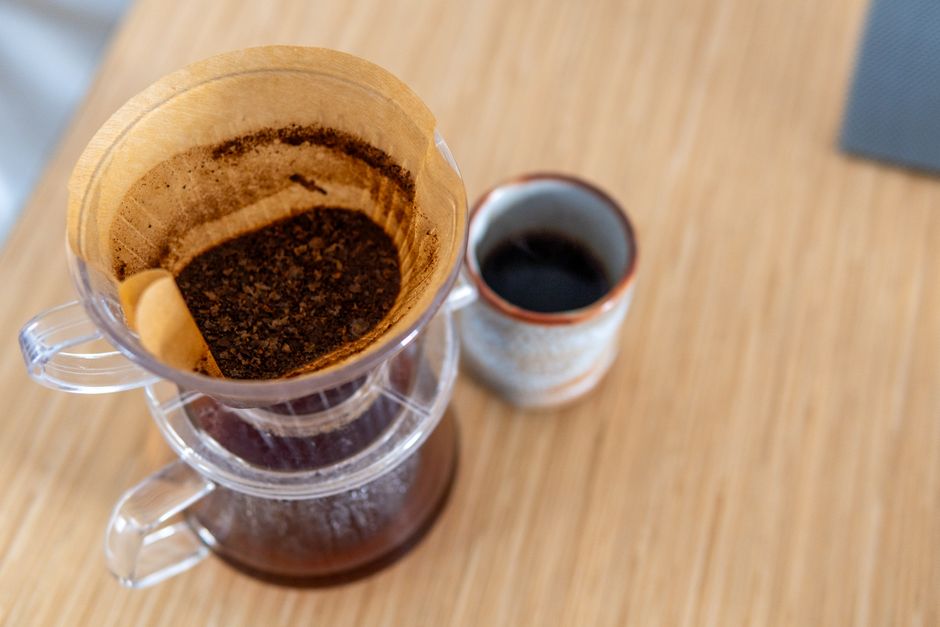
Extremely knowledgeable people make exceptionally good coffee in rooms that look almost deliberately plain. No wall of syrups, no enormous menu, nothing buried under whipped cream.
The philosophy is roughly: good beans, roasted carefully, brewed properly.
And preferably not rushed.
That last part is very Norwegian. We even have kaffekos, one of those words that refuses to translate elegantly. It is the cosy bit around the coffee: sitting down, talking, taking a break, enjoying it.
The coffee matters. So does the pause.

Grünerløkka is a good place to understand it
We are slightly biased.
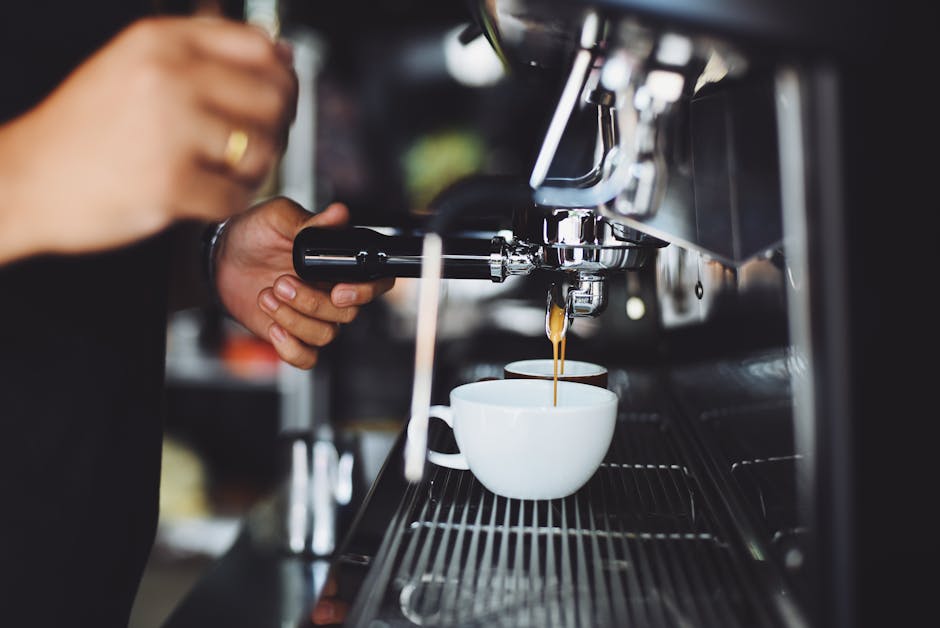
Grünerløkka is where OsloWay's original food tour began, and it is still one of our favourite parts of the city to show people. It also happens to be one of the best places to meet Oslo's coffee culture.
Not a coincidence. Grünerløkka was a working-class, industrial neighbourhood, and over the years the old workshops and industrial spaces have filled with small restaurants, bars, bakeries, vintage shops and independent businesses. Coffee slotted into that quite naturally.
You do not need a coffee pilgrimage. Our favourite approach is to wander. Walk along Thorvald Meyers gate, turn down a side street, have a look around Olaf Ryes plass, cross the river, stop when somewhere looks interesting.
But if coffee is the mission, here is where we would send you.
Tim Wendelboe, Grüners gate 1
The obvious one, and obvious for good reason.
If you are genuinely curious about Norwegian specialty coffee, go. You do not need to arrive discussing processing methods and altitude. Tell them what you normally drink and ask what they would recommend.
And if you usually take milk, try a filter coffee black, just once.
You may never forgive us. Or you may suddenly understand the whole business.
Supreme Roastworks, Thorvald Meyers gate 18
Another Grünerløkka favourite, and one that manages to be serious about coffee without being serious about itself.
Supreme Roastworks has been part of Oslo's specialty scene since 2008, and co-founder Odd-Steinar Tøllefsen won the World Brewers Cup in 2015.
None of which you need to know on the way in. It is simply a very good neighbourhood coffee shop. Get a coffee, find a seat if you are lucky, carry on exploring afterwards.
Java Espressobar, Ullevålsveien 47
Java is not in Grünerløkka, you will find it at St. Hanshaugen, but we could hardly write about Oslo coffee without it.
It opened in 1997 and belongs to the beginning of the city's modern specialty-coffee story. We like that it still feels like a neighbourhood cafe rather than a coffee museum.
If you are walking around St. Hanshaugen, stop in.
Fuglen, Universitetsgata 2
A different sort of Oslo institution.
By day it is a coffee bar surrounded by beautiful Norwegian vintage furniture. Later it becomes a cocktail bar. Some of the furniture is for sale.
It sounds like an odd combination until you are sitting in it, at which point it feels entirely sensible.
If you like Scandinavian design as much as coffee, add it to the list.
And then there is the old-school Norwegian coffee
One more piece of advice: do not spend your whole trip hunting perfect specialty coffee.
Have the ordinary Norwegian version too.
If someone offers you coffee at a cabin, drink it. If you are sitting by a fire after a walk in the forest and a slightly battered thermos of black coffee appears, drink that as well.
Buy a bolle, one of our soft Norwegian sweet buns, to go with it.

It was not made by a world champion barista. But it is just as much Norwegian coffee culture as anything in Grünerløkka.
Possibly more.
Our favourite way to drink coffee in Oslo
It depends on the season.
On a cold winter morning, give us a small cafe, a window seat and something warm from the bakery.
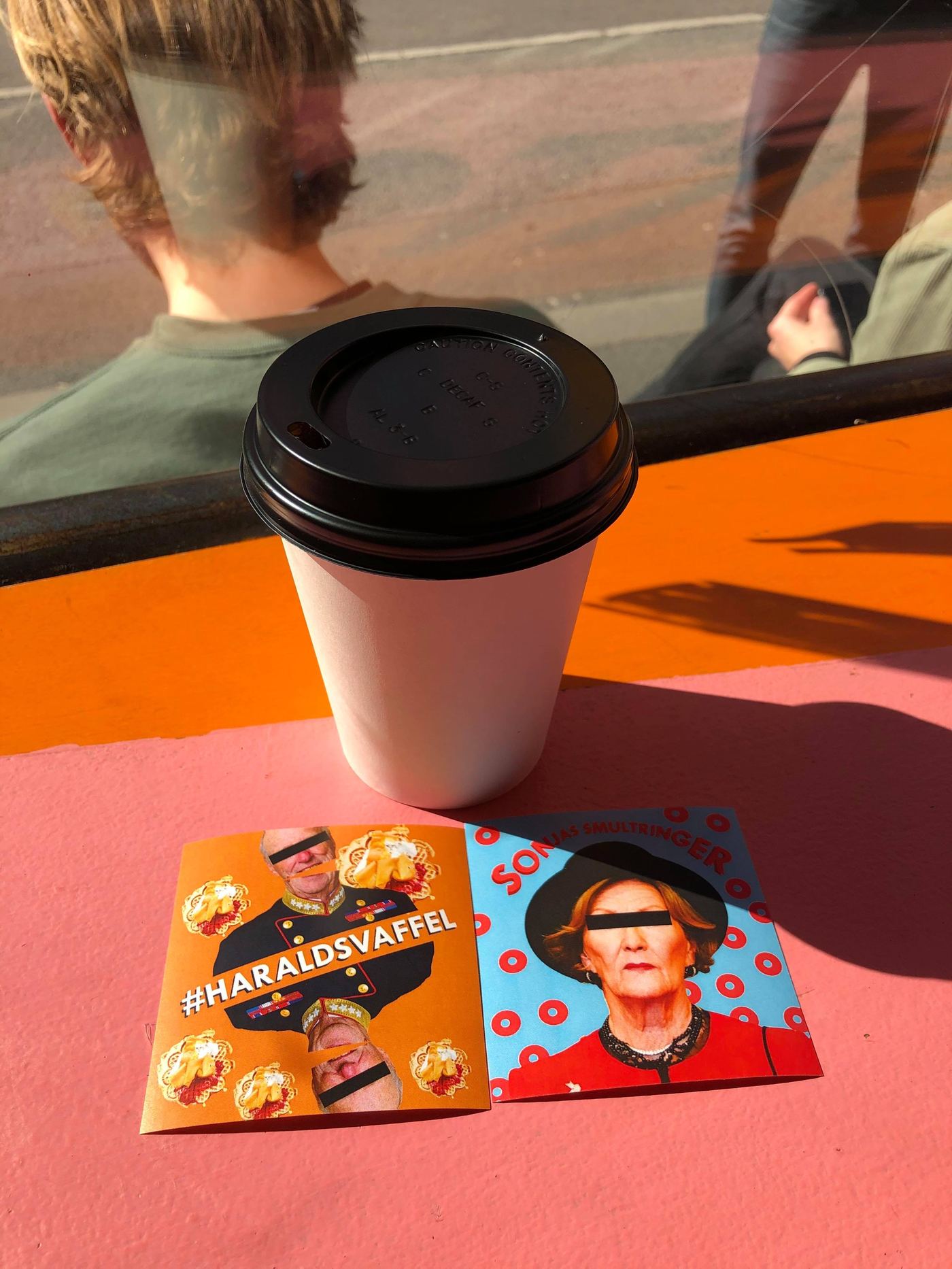
But on the first properly sunny days after winter, you take it away with you. You find a bench along Akerselva or in one of Grünerløkka's parks. And you sit in the sun with half of Oslo, everyone agreeing that 9 degrees is perfectly reasonable T-shirt weather.
That is Oslo coffee culture. Not only what is in the cup, but everything happening around it.
Come and see Grünerløkka with us
Coffee is one small part of Grünerløkka's food story.
The neighbourhood has changed enormously, but it has kept the independent, slightly creative character that made us want to show it to people in the first place.
Which is why we created OsloWay's original Grünerløkka Food Tour. We wanted visitors to do more than walk through the area: to taste Norwegian food, meet some of the people behind the places we love, and get a feel for how Oslo actually lives and eats.
So yes, go and have a very serious cup of coffee.
Then keep walking. Grünerløkka has plenty more to show you.
See you in Oslo. ☕